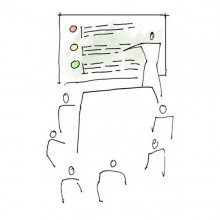
We should start with an overview of where you are and what comes next. Client teams are often the people we need to assist in understanding the complexities and implications at this stage. Steering committees often need the big picture and most important concerns. in both cases, clients need to understand whether you require their action on particular items or are just informing them.Please click on the link for more information
The need to set priorities and focus on the right things is ever present. It can help for a team to examine the time schedule to smaller units of time and create a matrix with the various expertise and inputs required. When tracking issues in this way you can see which things are getting resolved and which thing may lag behind.Please click on the link for more information
Certainly time is usually a constraint and confidentiality is usually a compliance requirement. But beyond those, some things that commonly arise are: 1) Is the building ready? 2) Are there any structural requirements? 3) Are there compliance issues from the client perspective?Please click on the link for more information
A great technique is to plan for a basic correct response that meets the requirements, budgets and technicalities at a minimum and then have the team consider value added ideas that create excitement and innovative approaches well beyond that. Some teams create spaces for their project where they can pin up and share information in a room or on a wall. This can be done virtually if the team is in several locations.Please click on the link for more information
The primary objective of schematic design is to take our understanding of what is needed and develop a design solution that we believe can deliver great value to our clients businesses.Since every project is somewhat unique, we will very likely need to explain that design solution to our clients. So our objectives are not only developing a great solution but also finding the optimum way to bring our client into the understanding of why we think it is the right solution for them.Please click on the link for more information
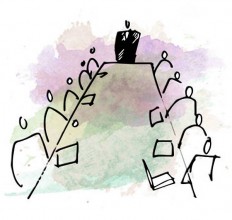
In terms of workplace design, committees are often very senior client people who cannot commit their time to the project but must have oversight. Your director or head of office as well as many of our strategy experts and global designers have a great deal of experience they can impart to you about working with committees. Please go to the link.Please click on the link for more information
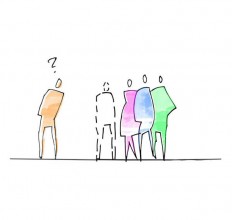
The transition from one person in a key role to another needs to be managed well. Ideally there should be a significant overlap between the outgoing and incoming person transitioning into the role. As these situations can be quite sensitive, the handover needs to be managed well.Please click on the link for more information
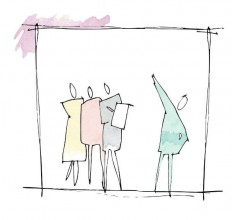
The disagreements and unmet concerns may reach a point where the internal conflict of the client’s team creates significant risk to the ongoing project. This may cause delays, changes or confusion for the rest of the project team. You can and should advise your key client contact what is at stake if the risk to progress should continue.More Information
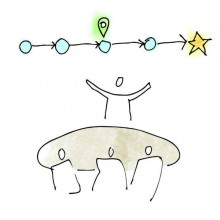
On the IPD Map you won’t find an indication of where a contract is signed. It could happen right from the start, after initial design or at some other point. While contracts are necessary, having real agreement with a client through deeper discussion, exploration and consensus with them is crucial for a “meeting of the minds”. What our project leaders need to focus on mostly is gaining that real understanding of what the client needs and what is expected to be delivered.Please click on the link for more information
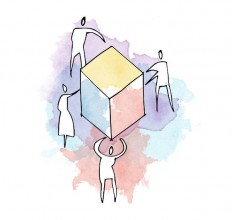
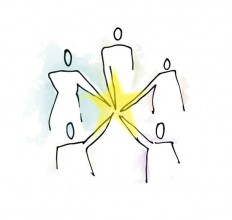
The definition of workplace project success comes mostly from the client. However, we know that once we fully understand the client’s goals concerns and agendas and we think about our goals concerns and agendas then we can think about what actions we can take that will lead to an outcome that will satisfy them both.More Information
A disagreement on what needs rectifying can usually be traced back to either a misunderstanding or lack of communication on what was to be delivered or it may simply be that the client personnel has changed and new client people don’t know the history of how an item was designed or what decisions came before. As this can be a sensitive matter, ideally the situation should be handled in person to understand fully what has happened.Please click on the link for more information
Inspections are always carried out throughout an entire project. They certainly do not occur only at the completion. However the most comprehensive one as a whole may be at completion, and there are two types. 1). Pre Inspection, and 2). Final Inspection.More Information
Our project leadership and client relationship personnel maintain long standing relationships with our highly valued clients and close to 80% of our work is repeat business. So our people are very aware that our business is relationship driven. Often our people who help clients with ongoing smaller renovations develop trusting relationships with our clients and are the first to hear about upcoming work as a result.Please click on the link for more information
Typically this may include: fact finding, surveys, end user workshops and observations that culminate in a final report with key findings and recommendations.Please click on the link for more information
Certainly regular reporting sessions are held where all participants attend and report on progress and next steps. But beyond this, the project leader and construction manager need to maintain a free flow of communication so that people feel they are part of a team and their voices are heard. In this way our trades and construction professionals become partners.Please click on the link for more information
 Please click on the link for more information
 Please click on the link for more information
 Please click on the link for more information
 Please click on the link for more information
 Please click on the link for more information
 Please click on the link for more information
 Please click on the link for more information
 More Information
 Please click on the link for more information
 More Information
 Please click on the link for more information
 More Information
 Please click on the link for more information
 Please click on the link for more information
 Please click on the link for more information